

In today’s fast-evolving industrial landscape, automation plays a crucial role in improving efficiency, accuracy, and productivity. One of the core technologies driving this transformation is the PLC control system. For businesses looking to stay competitive, understanding how a PLC control system Malaysia solution works can be a game changer.
This guide will walk you through everything you need to know—from what a PLC is to how it benefits Malaysian industries.
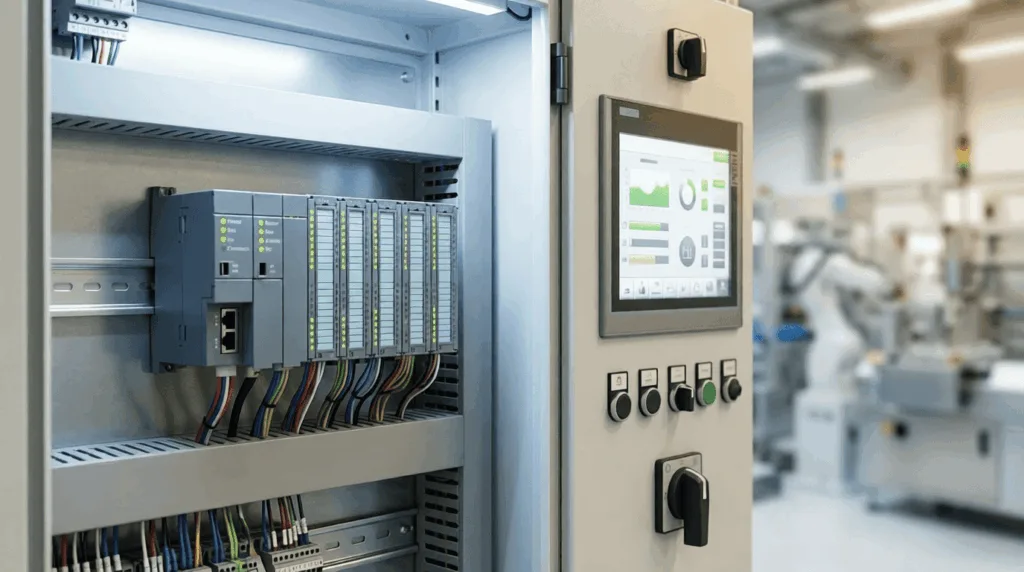
What Is a PLC Control System?
A Programmable Logic Controller (PLC) is an industrial computer used to control machinery and processes in factories. It monitors inputs (like sensors or switches), processes data, and triggers outputs (such as motors, valves, or alarms).
Unlike traditional control systems, PLCs are highly reliable, flexible, and designed to operate in harsh industrial environments.
How Does a PLC Control System Work?
A PLC system works through a simple but powerful process:
- Input Stage: Receives signals from sensors, switches, or devices
- Processing Stage: Executes programmed logic based on inputs
- Output Stage: Sends commands to machinery or systems
This automation allows processes to run continuously with minimal human intervention, reducing errors and increasing efficiency.
Key Components of a PLC System
A complete PLC control system in Malaysia typically includes:
- CPU (Central Processing Unit) – The brain of the system
- Input/Output Modules (I/O) – Connects the PLC to external devices
- Power Supply – Provides stable electrical power
- Programming Device/Software – Used to create and modify control logic
- Human Machine Interface (HMI) – Allows operators to monitor and control processes
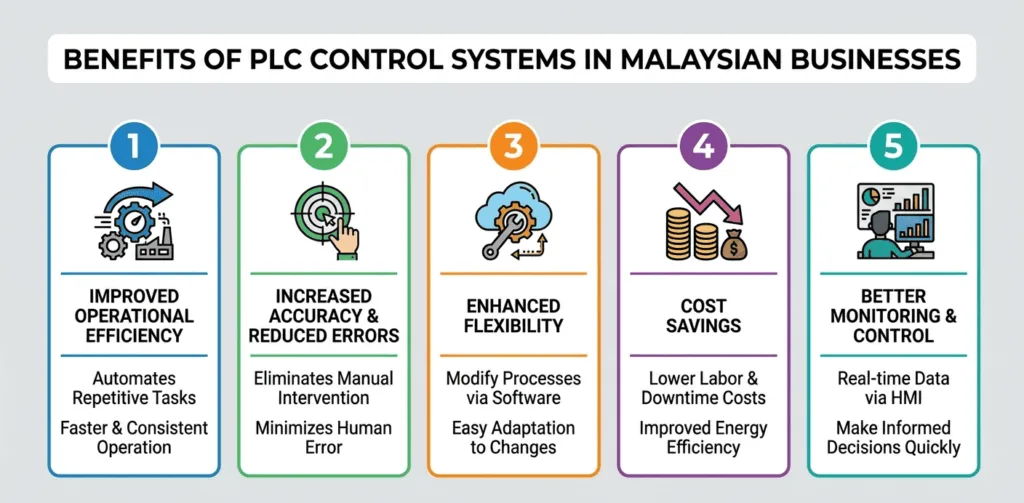
Benefits of PLC Control System Malaysia for Businesses
1. Improved Operational Efficiency
PLC systems automate repetitive tasks, allowing operations to run faster and more consistently.
2. Increased Accuracy and Reduced Errors
By eliminating manual intervention, PLCs significantly reduce the risk of human error.
3. Enhanced Flexibility
Processes can be easily modified through software updates without changing hardware.
4. Cost Savings
Reduced labor costs, minimized downtime, and improved energy efficiency lead to long-term savings.
5. Better Monitoring and Control
With integrated HMI systems, operators can monitor real-time data and make informed decisions quickly.
Common Applications in Malaysia
PLC control systems are widely used across various industries in Malaysia, including:
- Manufacturing – Assembly lines, machine automation
- Food & Beverage – Packaging, processing, and quality control
- Oil & Gas – Process control and safety systems
- Water Treatment – Pump control and monitoring systems
- Electronics – Precision assembly and testing
PLC vs Traditional Control Systems
| Feature | PLC Control System | Traditional Control System |
|---|---|---|
| Flexibility | High (programmable) | Low |
| Maintenance | Easy | Complex |
| Scalability | High | Limited |
| Reliability | Very high | Moderate |
| Cost Efficiency | Long-term savings | Higher maintenance cost |
How to Choose the Right PLC Control System Malaysia
When selecting a PLC system for your business, consider:
- Industry requirements and application type
- System scalability for future expansion
- Compatibility with existing machinery
- Ease of maintenance and support
- Experience of the system provider
Working with an experienced automation provider ensures that your system is tailored to your operational needs.
Why Choose ACT WT for PLC Control Systems?
At ACT WT, we deliver reliable and customized PLC control system Malaysia solutions tailored to different industries. Our goal is simple—help your business run more efficiently with smart, scalable automation.
What We Offer
- Custom-built automation systems based on your operational needs
- Electrical control panel design and seamless system integration
- Full project support from consultation to installation and commissioning
- High-quality components for long-lasting performance
- Compliance with industry standards and best practices
What You Gain
With our expertise, you can:
- Improve productivity
- Reduce downtime
- Enhance overall operational efficiency
At ACT WT, we combine technical know-how with dependable support to ensure your automation system delivers consistent, long-term results.
Conclusion
A PLC control system is a vital component of modern industrial automation. For Malaysian businesses aiming to enhance efficiency, reduce costs, and stay competitive, investing in the right PLC solution is essential.
By understanding how PLC systems work and choosing the right partner, you can transform your operations and unlock long-term growth.
Frequently Asked Questions (FAQs)
What is a PLC control system used for?
A PLC control system is used to automate industrial processes such as machinery operation, production lines, and facility control.
Is PLC suitable for small businesses in Malaysia?
Yes, PLC systems are scalable and can be customized to suit both small and large operations.
How long does a PLC system last?
With proper maintenance, PLC systems can last 10–15 years or more.
Can PLC systems be upgraded?
Yes, PLC systems can be easily updated or expanded through software and additional modules.
What industries use PLC control systems in Malaysia?
Industries such as manufacturing, food processing, oil & gas, and water treatment commonly use PLC systems.